
The Machu Picchu rainy season is defined by elevated atmospheric moisture, increased cloud persistence, and higher precipitation concentration driven by Amazon basin air masses interacting with Andean elevation gradients.
Rather than producing constant rainfall, this period reshapes daily climatic behavior inside the citadel. Fog formation, humidity accumulation, and afternoon shower cycles become more pronounced between November and April, altering visibility dynamics and trail conditions without interrupting site access.
Understanding these structural climate patterns allows travelers to anticipate environmental variability rather than assume continuous storms.
For a broader technical explanation of year-round climate mechanics, see our Machu Picchu Weather guide.
When Is the Rainy Season in Machu Picchu?
The rainy season typically extends from November through April. Peak precipitation occurs between January and February, while March and early April function as gradual stabilization months before the dry cycle consolidates.
Humidity levels frequently exceed 85 percent during peak months, amplifying atmospheric density and increasing morning fog frequency compared to the dry season.
Unlike the colder Andean plateau climate of Cusco, Machu Picchu’s lower elevation and canyon positioning intensify moisture retention.
Rainfall Distribution and Daily Atmospheric Behavior
Rain in Machu Picchu rarely persists throughout an entire day. Instead, precipitation commonly follows a cyclical pattern shaped by canyon thermodynamics.
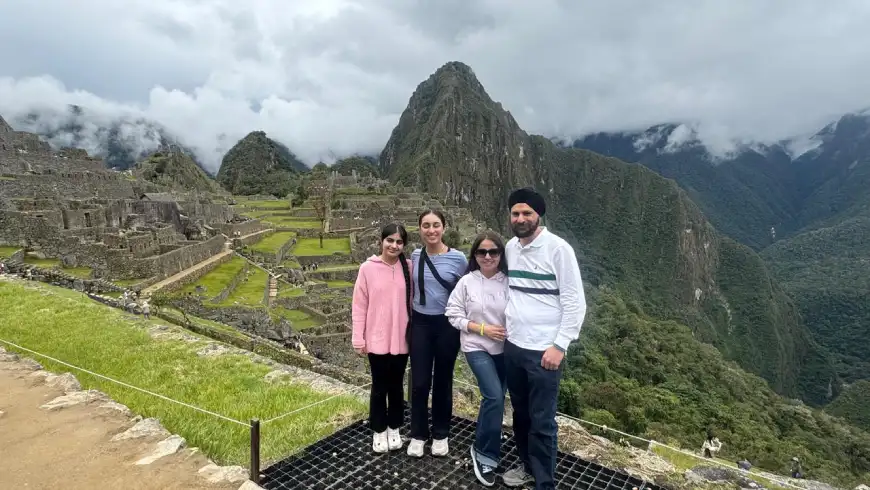
Overnight condensation accumulates along the Urubamba corridor. Morning hours often begin with dense mist covering surrounding peaks. As solar radiation intensifies between late morning and midday, thermal lift may disperse cloud layers. Afternoon instability then increases the probability of localized showers.
This variability explains why panoramic conditions may shift significantly within a few hours.
Rainy Season Breakdown by Month
Although November through April share elevated rainfall characteristics, each month behaves differently.
- November marks the gradual return of precipitation after the dry season. Rain events remain moderate but increase in frequency toward the end of the month.
- December introduces stronger rainfall intervals combined with rising holiday travel demand.
- January consolidates heavy afternoon precipitation patterns, with lush vegetation intensifying across terraces and surrounding peaks.
- February records the highest accumulated rainfall of the year. Cloud persistence tends to last longer into midday. The Inca Trail closes annually for maintenance, though Machu Picchu remains fully operational.
- March begins gradual rainfall reduction while maintaining high humidity and vivid green landscapes.
- April functions as a transitional month. Rainfall decreases progressively, though occasional showers remain possible before the dry cycle stabilizes.
For a focused analysis of early-year conditions, consult our January and February weather breakdown.
The Role of the Urubamba River and Microclimate Amplification
The Urubamba River contributes significantly to rainy season dynamics. Elevated river flow increases evaporation within the canyon, reinforcing moisture concentration around the citadel.
Moist air masses rise, cool against surrounding granite peaks, and condense into persistent fog layers. During stronger El Niño cycles, rainfall concentration may intensify temporarily, influencing river volume and cloud persistence patterns.
This interaction between river evaporation and elevation gradient is central to understanding Machu Picchu’s cloud forest classification.
Landscape Transformation and Visual Impact
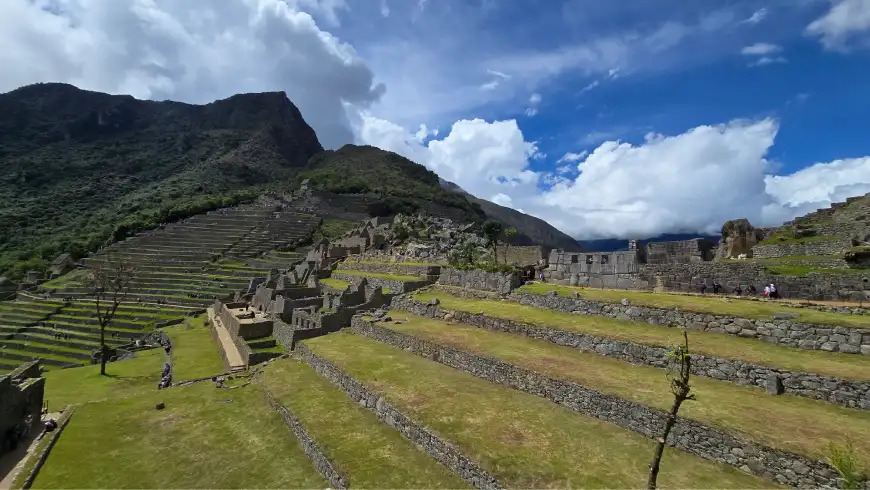
Rainy months intensify vegetation density and waterfall activity. Terraces appear saturated with green tones, and mist movement across stone structures creates atmospheric depth not present during peak dry months.
While clear panoramic probability decreases statistically compared to June and July, the visual character becomes more dynamic.
Rain alters ambiance rather than accessibility.
Impact on Trails and Mountain Extensions
Elevated humidity affects stone traction on staircases and mountain routes such as Huayna Picchu and Machu Picchu Mountain.
During peak rainfall weeks, surfaces may become slippery, requiring careful footing and appropriate footwear. However, regulated visitor circuits inside the citadel remain operational year-round.
Trail conditions differ from the dry season primarily due to surface moisture rather than structural closures.
For contrast with lower-rainfall months, see our Machu Picchu dry season analysis.
Transportation and Operational Considerations
Heavy rainfall may occasionally influence regional transport between Cusco, Ollantaytambo, and Machu Picchu Pueblo. Increased river volume and localized landslides can cause temporary train schedule adjustments during peak precipitation events.
Full closures remain uncommon, as railway operators implement preventive monitoring during high-rainfall periods.
Travelers booking organized Machu Picchu tours from Cusco benefit from coordinated scheduling and real-time operational updates during rainy months.
Advantages of the Rainy Season
Outside holiday weeks, visitor density decreases. Entry permits tend to remain available longer compared to peak dry months. Internal circuit flow feels less congested, allowing steadier pacing within designated routes.
Additionally, landscape intensity reaches its highest visual saturation during this period.
Environmental Challenges to Consider
Humidity increases thermal perception and moisture retention. Afternoon rainfall probability rises between January and March. Persistent cloud cover may temporarily reduce long-range visibility.
Preparation mitigates these variables.
Who Adapts Well to the Rainy Season?
The rainy season generally aligns with travelers who value atmospheric depth, lower crowd pressure, and flexible itineraries.
Those prioritizing maximum panoramic clarity may prefer lower-rainfall months, though seasonal comparison should be evaluated within a broader strategic framework available in our Best Machu Picchu ticket options for rainy season
What to Pack During the Rainy Season
Moisture management becomes central. Waterproof outer layers, high-traction footwear, and protective coverings for electronics are strongly recommended.
Despite increased cloud presence, UV radiation remains significant at altitude, making sun protection necessary even on overcast days.
For a structured seasonal comparison before deciding your travel window, consult our Best Time to Visit Machu Picchu guide.
Conclusion
The Machu Picchu rainy season is defined not by constant rainfall but by elevated humidity, intensified cloud dynamics, and afternoon precipitation cycles shaped by canyon microclimate behavior.
When travelers understand these structural patterns and coordinate logistics accordingly, rainfall becomes a manageable environmental variable rather than a barrier.
Rain changes the visual rhythm of Machu Picchu.
Visitors choosing a private Machu Picchu tour can adapt pacing within assigned entry slots during variable weather conditions.
FAQs
Does it rain all day during the rainy season?
Rain typically occurs in concentrated intervals rather than continuous full-day storms.
What is the rainiest month in Machu Picchu?
February generally records the highest accumulated rainfall levels.
Is Machu Picchu open during the rainy season?
Yes. The site operates year-round. Only the Inca Trail closes in February for maintenance.
Does rainfall affect train operations?
Occasional schedule adjustments may occur during extreme rainfall events, but complete service interruptions are uncommon.
Karen Pamela Riveros Rojas
