
What is the best time to visit Machu Picchu?
The best time to visit Machu Picchu is typically April, May, and September, when weather stability combines with moderate crowds, better ticket availability, and greater flexibility when choosing entry circuits.
However, the ideal travel period depends on your priorities. Some travelers prioritize clear mountain views, while others focus on lower crowds, better prices, or easier logistics. Understanding seasonal differences in Machu Picchu weather can help you choose the most suitable month for your visit.
Choosing the right season can also make your trip significantly more comfortable, especially if you are traveling at a slower pace. This is why understanding the best time to visit Machu Picchu for seniors is an important part of the planning process.
When Is the Best Time to Visit Machu Picchu?
Choosing the best time to visit Machu Picchu is not merely about avoiding rainfall. It is a calculated planning decision that influences ticket availability, entry circuits, train coordination, altitude adjustment, pricing dynamics, and the overall atmosphere inside the citadel.
Peru’s geography is exceptionally diverse. While Cusco sits at 3,300 meters, Machu Picchu rests at 2,430 meters within a transitional zone between the Andes Mountains and the upper Amazon basin. This geographic positioning creates seasonal behavior that differs significantly from Cusco city or even the Sacred Valley.
Many travelers oversimplify the decision:
Dry season = perfect.
Rainy season = bad.
The reality is far more complex.
Crowd density, government-regulated ticket caps, peak international demand cycles, national holidays, and itinerary combinations often influence the experience more than climate alone.
For a detailed breakdown of seasonal climate behavior, consult our complete Machu Picchu weather guide before choosing your dates. This article focuses specifically on strategic timing and decision-making.
To determine when to visit Machu Picchu tours from Cusco properly, you must evaluate four overlapping dimensions:
- Seasonal travel patterns in the Andes
- Visitor demand and Ministry of Culture ticket limits
- Transportation logistics from Cusco and Ollantaytambo
- Your personal travel objectives (photography, trekking, comfort, budget flexibility)
This guide analyzes each variable in depth so you can make an informed and structured decision rather than relying on generalized travel advice.
Understanding the Climate of Machu Picchu in Context
Machu Picchu sits at approximately 2,430 meters (7,972 ft) above sea level , nearly 900 meters lower than Cusco. This difference is significant. The lower elevation creates a warmer and more humid environment, influenced by proximity to the Amazon basin rather than the colder Andean plateau.
However, for travel planning purposes, climate should be understood as a strategic variable, not simply a meteorological one.
Machu Picchu operates within two primary seasonal cycles that affect visibility, demand patterns, and itinerary flexibility.
For a full technical climate breakdown, including monthly rainfall patterns and temperature ranges, consult our detailed Machu Picchu weather guide. Below is a strategic summary focused on travel decision-making.
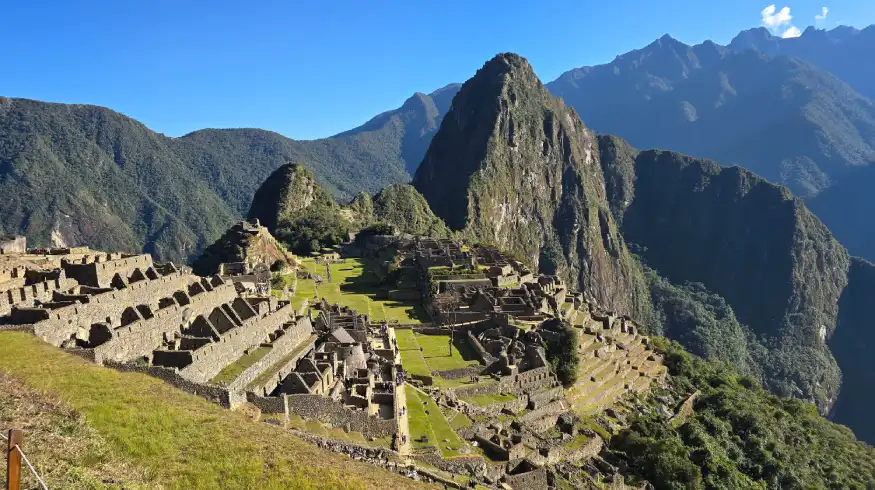
Dry Season (May to October)
Rainfall decreases significantly during this period, and mid-day visibility tends to be more consistent. Clear panoramic views are more probable, particularly between late morning and early afternoon.
Strategic Advantages:
- Greater likelihood of unobstructed mountain backdrops
- More predictable trekking traction, particularly for travelers planning to explore popular Machu Picchu hiking trails.
- Higher sunrise visibility probabiityl
Strategic Tradeoffs:
- Increased visitor demand
- Faster ticket sell-outs (especially Circuit 2)
- Higher train and accommodation pricing
- Reduced last-minute flexibility
Dry season does not mean zero precipitation. Light showers may still occur, particularly during transitional months such as October.
For a complete analysis of how this season affects logistics and planning, see our Machu Picchu dry season guide.
Rainy Season (November to April)
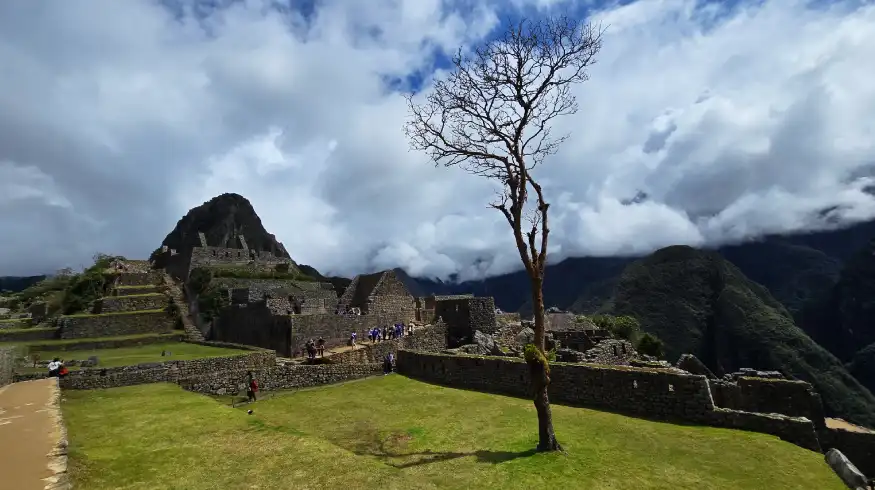
Rainfall becomes more frequent, especially between January and March. Precipitation typically concentrates in afternoon periods rather than continuous daily rainfall.
Mornings often remain accessible, though intermittent fog can temporarily affect panoramic visibility.
Strategic Advantages:
- Intensely green landscapes
- Lower overall visitor density (excluding holiday weeks)
- Greater flexibility in circuit selection due to wider availability among the different Machu Picchu ticket options.
- More competitive hotel pricing
Strategic Tradeoffs:
- Increased humidity
- Slippery stone pathways
- Higher probability of temporary cloud cover
Travelers planning to visit during this period can review our detailed January and February weather guide for a more specific monthly analysis.. Machu Picchu itself remains open year-round.
For travelers specifically considering this period, consult our detailed guide on visiting Machu Picchu during the rainy season.
Machu Picchu: Strategic Month-by-Month Analysis
Below is a decision-focused comparison designed to help you evaluate demand pressure, logistical flexibility, and overall travel strategy rather than climate alone.
| Month | Weather | Crowds | Strategic Insight |
|---|---|---|---|
| Jan | Heavy rain, mist | Low–Moderate | Lush landscapes, flexible schedules needed |
| Feb | Peak rain | Low | Fewer visitors, Inca Trail closed |
| Mar | Rain decreasing | Moderate | Improving visibility + green scenery |
| Apr | Clear mornings | Moderate | One of the best shoulder months |
| May | Dry season starts | Increasing | Stable weather, rising demand |
| Jun | Dry & sunny | High | Excellent weather, book early |
| Jul | Peak dry | Very High | Best visibility, highest demand |
| Aug | Dry, windy | High | Slightly calmer than July |
| Sep | Stable & clear | Moderate | Best overall balance month |
| Oct | Transition showers | Moderate | Good value before rains increase |
| Nov | More rain | Low–Moderate | Green scenery, fewer crowds |
| Dec | Mixed rain | Moderate–High | Holiday demand late month |
Why April and September Stand Out
April and September consistently offer one of the strongest strategic balances of the year. These months typically combine manageable visitor density, improved visibility probability ,Travelers can also compare seasonal visibility patterns in our Machu Picchu weather guide, and better ticket flexibility compared to peak-season July.
For travelers considering a Machu Picchu private tour, these shoulder-season windows allow more personalized pacing, circuit choice, and smoother train coordination.
Ticket Availability and Government Limits
Machu Picchu operates under regulated daily visitor caps enforced by Peru’s Ministry of Culture. Entry is organized by time slots and specific circuits.
During high season (June–August):
- Circuit 2 sells out first
- Morning entries disappear weeks in advance
- Train tickets may increase in price
- Private guide scheduling becomes more competitive
During shoulder months:
- More circuit options available
- Greater schedule flexibility
- Easier coordination for combined Sacred Valley + Machu Picchu programs
Choosing the right month is not just about weather ,it directly impacts how much freedom you have when selecting entry times.
High Season Behavior (June–August)
During peak international travel months:
- Circuit 2 typically sells out first due to its classic panoramic route
- Early morning entries (6:00–8:00 AM) disappear weeks or even months in advance
- Train fares from Ollantaytambo fluctuate upward with demand
- Private guide scheduling becomes increasingly competitive
In this period, choosing your month directly affects your circuit flexibility.
Shoulder Season Dynamics
During April, May, September, and October:
- Broader circuit availability
- Greater freedom in entry time selection
- Smoother coordination for combined itineraries such as Sacred Valley + Machu Picchu
- More adaptable train connections
The strategic difference between peak and shoulder season is not only comfort, it is control.
Choosing the right month determines how much flexibility you retain in designing your experience.
When Is the Best Time Based on Traveler Profile?
The optimal month depends on your objectives rather than a universal ranking.
- For Photographers
May and September typically offer stronger clarity probability combined with moderate visitor density, allowing cleaner compositions and reduced crowd interference.
- For Budget-Conscious Travelers
January, February, and November generally provide lower accommodation pricing and greater availability across circuits. Flexibility becomes your advantage.
- For Families
April, May, and September provide balanced walking conditions without peak-season density pressure.
- For Trekkers
Multi-day routes such as the Inca Trail and Salkantay benefit from more stable traction between May and August, when rainfall probability decreases.
- For Private Tour Travelers
Shoulder-season months provide better circuit choice, pacing flexibility, and smoother coordination for customized experiences.
How Season Impacts Multi-Destination Itineraries
Most travelers do not visit Machu Picchu in isolation. They often combine it with:
- The Sacred Valley
- Rainbow Mountain
- Humantay Lake
- Cusco city tours
Rainfall impacts high-altitude destinations like Rainbow Mountain and Humantay Lake more dramatically than Machu Picchu itself. If your itinerary includes multiple mountain hikes above 4,000 meters, dry season becomes significantly more relevant.
However, if your focus centers primarily on Machu Picchu and cultural experiences, rainy season months can still provide a rewarding and atmospheric visit.
Strategic planning should consider the entire itinerary — not only the citadel.
Is There a Truly “Best” Month?
If selecting based on overall equilibrium:
Late April, May, and September consistently provide the strongest combination of:
- Manageable crowd density
- Strong visibility probability
- Improved ticket flexibility
- Stable logistical coordination
- Best overall balance → April & September
- Best weather clarity → June & July
- Lowest crowds → February
- Best budget flexibility → January & November
However, travelers prioritizing cost efficiency may prefer January or November, while peak-season visitors may value predictability over flexibility.
There is no universally perfect month.
There is only the month that aligns with your planning priorities.
Final Consideration: Preparation Outweighs Season
Machu Picchu operates year-round. Successful visits depend less on the calendar and more on structured preparation.
Travelers who:
- Secure entry permits in advance
- Select the appropriate circuit
- Coordinate train schedules carefully
- Acclimatize in Cusco before visiting
- Understand seasonal demand cycles
consistently report positive outcomes regardless of season.
- Season influences comfort.
- Preparation determines success.
Planning Machu Picchu the Right Way
Choosing the best time to visit Machu Picchu is only the first step. Entry permits, train schedules, circuit availability, and transportation logistics all influence the overall experience. Explore our Machu Picchu tours or enjoy a more personalized journey with a Machu Picchu private tour designed around your travel preferences.
FAQs
Is Machu Picchu too crowded in July?
The best time to visit Machu Picchu is typically April, May, and September, when weather stability combines with moderate crowds, improved ticket availability, and greater itinerary flexibility. However, the ideal month depends on your travel priorities.
What Month Has the Best Weather in Machu Picchu?
June and July generally offer the clearest skies and lowest rainfall levels. These months provide excellent visibility, although they also coincide with the highest visitor demand and reduced ticket availability.
Is September Better Than July for Visiting Machu Picchu?
For many travelers, yes. September often provides a better balance between weather conditions, crowd levels, and ticket flexibility. While July offers exceptional visibility, September typically allows a more relaxed experience.
Do Machu Picchu Tickets Sell Out in Advance?
Yes. Popular circuits, particularly Circuit 2, often sell out weeks or even months ahead during the high season. Travelers planning to visit between June and August should book tickets as early as possible.
How Far in Advance Should I Book Machu Picchu?
During peak season, booking two to three months in advance is recommended. For shoulder-season travel, availability is generally more flexible, although early booking remains advisable.
What Is the Cheapest Time to Visit Machu Picchu?
January, February, and November usually offer lower accommodation prices and greater ticket availability. However, these months also coincide with higher rainfall probability.
Does Weather Affect Machu Picchu Circuits?
Yes. While all circuits remain open throughout the year, weather conditions can influence visibility, photography opportunities, and overall comfort. Clearer conditions are generally more common during the dry season.
Is the Rainy Season a Bad Time to Visit Machu Picchu?
Not necessarily. The rainy season offers greener landscapes, fewer visitors, and greater flexibility when choosing circuits and schedules. Many travelers enjoy the quieter atmosphere despite the increased chance of rain.
Which Months Are Best for Hiking Near Machu Picchu?
May through August generally provide the most stable conditions for hiking routes such as the Inca Trail and Salkantay Trek due to lower rainfall and improved trail traction.
Karen Pamela Riveros Rojas
