
High in the Peruvian Andes, southeast of Cusco, rises one of the most visually striking landscapes in South America: Vinicunca Rainbow Mountain, also known as the Seven Colors Mountain.
Located at over 5,000 meters (16,400+ ft) above sea level, this mineral-striped peak has become one of the most requested high-altitude hikes in Peru ,not just for its colors, but for the raw Andean scenery that surrounds it.
But visiting Vinicunca is not simply about taking a photo.
It requires preparation, acclimatization, and choosing the right logistics.
This guide covers everything you need to know before planning your Rainbow Mountain experience from Cusco.
Because of its extreme altitude, joining a guided Vinicunca Rainbow Mountain tour from Cusco ensures proper acclimatization support and professional logistics.
What Is Vinicunca Rainbow Mountain?
Vinicunca is a sedimentary mountain formation located in the Cusco region of Peru, near the Ausangate mountain range.
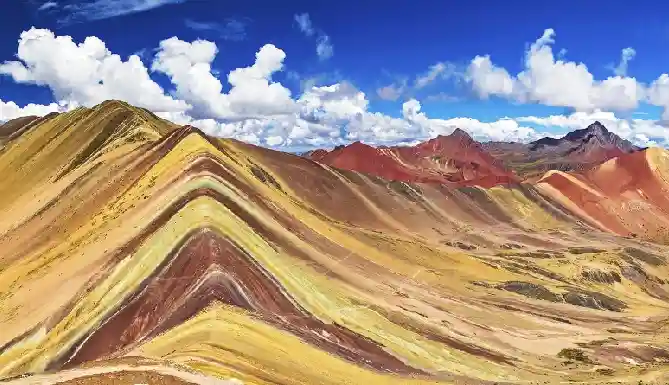
Its intense red, yellow, green, and turquoise stripes are the result of mineral-rich layers formed millions of years ago. Iron oxide creates the red tones. Copper compounds contribute to green shades. Sulfur-rich deposits produce yellows.
For decades, the mountain remained covered in snow. As glacial melt exposed its mineral composition, the colorful surface became visible, turning it into one of the most photographed natural landscapes in the Andes.
Unlike archaeological attractions, Vinicunca is a geological phenomenon.
Its appeal lies in nature’s raw transformation.
The Meaning of Vinicunca and Its Cultural Significance
Beyond its striking mineral colors, Vinicunca holds deep cultural meaning within Andean cosmology.
The name “Vinicunca” comes from the Quechua language and is traditionally broken into two components:
- Wini, associated with “black stone” or dark rock formations present in the region.
- Kunka, meaning “neck” or a high mountain pass.
Together, Vinicunca refers to a “colored mountain ridge” or the “mountain of seven colors,” a name that reflects both its geological diversity and its visual impact.
However, for local Quechua communities, the mountain represents more than layered minerals. In the Andean worldview, mountains are considered apus ,sacred protective spirits that guard the surrounding valleys and communities.
Reaching the summit is not only a physical achievement at over 5,000 meters above sea level. It is also a symbolic encounter with one of the sacred guardians of the Vilcanota mountain range.
Many families from nearby communities such as Pitumarca maintain ancestral traditions tied to this land. Their lifestyle ,herding llamas and alpacas, weaving traditional textiles, and honoring Pachamama (Mother Earth) remains closely connected to the mountain’s presence.
Understanding this spiritual dimension transforms the visit. What may appear at first as a geological spectacle becomes a living cultural landscape shaped by centuries of Andean belief systems.
Where Is Rainbow Mountain Located?
Vinicunca Rainbow Mountain is located in the district of Pitumarca, within the province of Canchis in the Cusco region of southern Peru. More specifically, it lies in the Ccayrahuire sector near the Pampachiri community, within the Vilcanota mountain range and close to the sacred Ausangate massif.
Geographically, the mountain sits between the Cusipata river inter-basin and the Chillihuani micro-basin, forming part of one of the most remote high-altitude Andean ecosystems in the region.
From Cusco, the drive to the trailhead via the Cusipata route takes approximately 3 hours to 3 hours and 30 minutes, depending on weather and road conditions. Due to unstable afternoon weather patterns at over 5,000 meters, most departures from Cusco begin between 4:00 and 5:00 AM.
Because of its extreme elevation and rural access roads, visiting Vinicunca independently can be logistically complex. Most travelers reach the trailhead through organized transportation or a guided tour from Cusco.
The high-altitude access point varies slightly depending on seasonal conditions and route selection.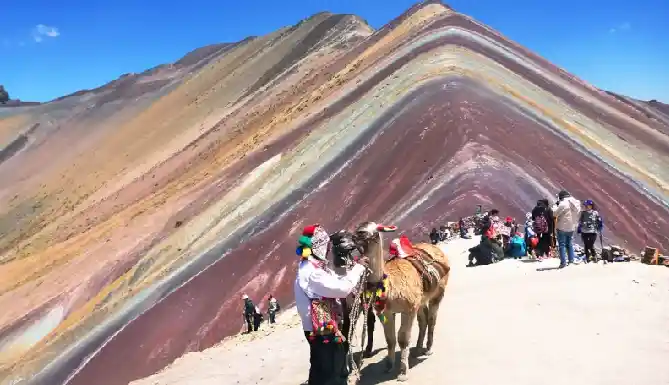
Rainbow Mountain Altitude and Physical Difficulty
Altitude is the most important factor when visiting Vinicunca.
- Elevation: approx. 5,036–5,200 meters (16,500–17,060 ft) depending on viewpoint
- Trail duration: 3 to 4 hours round trip
- Distance: approximately 7 km (4.3 miles) round trip
- Difficulty level: Moderate to challenging due to altitude
Although the trail itself is not technically complex, the extreme elevation makes the hike physically demanding. Oxygen levels decrease significantly above 5,000 meters, which can affect unacclimatized travelers. If you want a detailed explanation about preparation, pacing, and real trekking conditions, read our full guide on what to expect when hiking Rainbow Mountain before planning your visit.
Visitors should:
- Spend at least 1–2 days acclimatizing in Cusco
- Stay hydrated
- Avoid heavy alcohol consumption before the hike
- Consider coca tea or altitude medication if needed
Horses are available locally for partial assistance, but the final ascent must be done on foot.
For travelers concerned about physical demand, choosing a professionally organized guided Rainbow Mountain tour from Cusco significantly increases safety and comfort.
Best Time to Visit Vinicunca Rainbow Mountain
The Andean climate determines the visual experience.
Dry Season (April – October)
- Clear skies
- Stronger color contrast
- Colder mornings
- Most recommended period
Rainy Season (November – March)
- Possible mud on trails
- Cloud cover may obscure colors
- Fewer crowds
Morning departures are crucial year-round.
Weather in the Andes changes rapidly after midday.
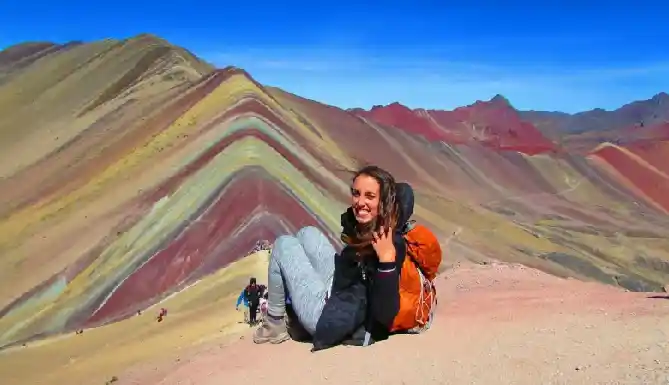
The dry season from April to October offers clearer skies and stronger color visibility, while the rainy season may bring cloud cover and muddy trails. Because weather patterns in the Andes can change rapidly, we recommend reviewing our complete Rainbow Mountain weather guide for updated seasonal insights before choosing your travel dates.
Vinicunca vs Palccoyo: Which Is Better?
Many travelers compare Vinicunca with Palccoyo Rainbow Mountain.
Vinicunca:
- Higher altitude
- More dramatic summit viewpoint
- More physically demanding
- Iconic photo perspective
Palccoyo:
- Lower elevation
- Multiple colored hills
- Easier hike
- Less crowded
While Vinicunca is the most iconic option, some travelers prefer a lower-altitude alternative with multiple colored hills and less physical effort. Explore the differences in our complete guide to the Palccoyo Rainbow Mountain alternative before deciding which experience fits your itinerary.
If your priority is the classic postcard view, Vinicunca remains the benchmark experience.
Can You Visit Red Valley from Vinicunca?
Yes. Many visitors extend the hike to the nearby Red Valley (Valle Rojo).
This area features intense red-toned landscapes formed by iron-rich soil. It offers a more secluded panoramic experience compared to the main viewpoint.
Not all tours include Red Valley access automatically, so confirming logistics in advance is important.
Many travelers choose to extend their hike toward the dramatic red landscapes nearby. The Red Valley near Rainbow Mountain offers panoramic views with fewer crowds and intense iron-rich formations that contrast beautifully with Vinicunca’s colors.
Is Rainbow Mountain Worth It?
For travelers seeking high-altitude adventure and natural contrast, yes – absolutely.
Vinicunca offers:
- One of the highest accessible viewpoints in Peru
- Unique geological formations
- Immersive Andean landscapes
- A sense of physical achievement
However, it is not a casual stroll.
It is an early start, high-altitude trek requiring preparation.
Those who approach it realistically tend to appreciate it more.
The Human Landscape Around Rainbow Mountain
While most visitors focus on the summit viewpoint, the journey to Vinicunca also passes through high-altitude pastoral lands inhabited by Quechua-speaking communities.
Along the trail, travelers often encounter:
- Llama and alpaca herders
- Traditional woven garments
- Small local markets near the trailhead
These are not staged experiences — they are part of everyday life in the Andes.
Respectful interaction with local residents enriches the journey and supports community-based tourism initiatives in the region.
Rainbow Mountain is not an isolated attraction. It is part of a broader highland ecosystem where culture, agriculture, and spirituality remain deeply intertwined.
How to Visit Rainbow Mountain from Cusco
There are three main options:
1. Organized Group Tour
Most common option. Includes:
- Transportation
- and lunch (varies by operator)
- Guide
- Basic support
2. Private Tour (Recommended for Comfort)
- Flexible schedule
- Personalized pacing
- Reduced crowd timing
- Greater assistance at altitude
3. Independent Transport (Not Recommended)
Logistically complex and limited without local coordination.
For safety, acclimatization guidance, and optimized timing, a professionally organized Vinicunca Rainbow Mountain tour from Cusco provides the most reliable experience.
Final Perspective
Vinicunca Rainbow Mountain is not just a colorful hill ,it is an extreme-altitude Andean experience shaped by geological time.
For those prepared physically and logistically, it becomes one of the most memorable landscapes in Peru.
When structured properly within your itinerary, it complements other Andean highlights while standing out as a natural phenomenon unlike any other.
If you are planning your Andean adventure, explore our complete Vinicunca Rainbow Mountain tour experience designed for comfort and safety.
FAQs
How high is Vinicunca Rainbow Mountain?
Vinicunca reaches approximately 5,036–5,200 meters (16,500–17,060 feet) above sea level, making it one of the highest accessible tourist viewpoints in Peru.
How difficult is the Rainbow Mountain hike?
The hike is considered moderate to challenging due to altitude rather than terrain. Most travelers complete the round-trip walk in 3 to 4 hours.
How long does it take to get to Rainbow Mountain from Cusco?
The drive from Cusco to the trailhead takes approximately 3 hours and 30 minutes, depending on traffic and route conditions.
Is Rainbow Mountain safe?
Yes, when properly acclimatized and accompanied by a professional guide. Altitude is the main factor to consider.
What is the best month to visit Rainbow Mountain?
The dry season from April to October offers clearer skies and better visibility of the mountain’s mineral colors.
Are horses available at Rainbow Mountain?
Yes, local communities provide horses for partial assistance during the hike. The final section must be completed on foot.
Karen Pamela Riveros Rojas
