
Qorikancha Temple, also known as the Temple of the Sun, was the most sacred religious site of the Inca Empire. Located in the heart of Cusco’s Historic Center, this remarkable archaeological complex combines extraordinary Inca stonework with the colonial Church of Santo Domingo, creating one of Peru’s most fascinating historical landmarks. Today, visitors can explore its perfectly crafted stone walls, learn about Inca astronomy and religion, and discover how two civilizations shaped one of Cusco’s most iconic attractions.
Few places in South America illustrate the meeting of two civilizations as powerfully as Qorikancha Temple Cusco. Once covered with sheets of gold and dedicated to Inti, the Inca Sun God, this magnificent temple represented the spiritual center of the Inca Empire and the most important place of worship in Tawantinsuyu.
Although Spanish conquerors removed its treasures during the sixteenth century, Qorikancha never lost its historical significance. Instead, it became a symbol of resilience, where the extraordinary engineering of the Incas continues to support the colonial Church of Santo Domingo, built directly above its foundations.
Today, Qorikancha ranks among the most visited archaeological sites in Cusco and forms an essential stop on almost every city tour itinerary. Whether you’re passionate about history, architecture, archaeology, or photography, the temple offers a unique opportunity to experience the legacy of the Inca civilization while exploring one of the city’s most impressive cultural landmarks.
This complete travel guide explains everything you need to know before your visit, including the temple’s fascinating history, architectural highlights, ticket information, opening hours, practical travel tips, and the best way to include Qorikancha in your Cusco itinerary.
Where Is Qorikancha Temple Located?
Qorikancha sits in the Historic Center of Cusco, only a 10-minute walk from Cusco’s Plaza de Armas, making it one of the city’s easiest archaeological sites to visit independently. Its central location allows travelers to combine the temple with several of Cusco’s most important attractions in a single day.
The archaeological complex stands along Avenida El Sol, one of Cusco’s main avenues, where visitors can easily arrive on foot, by taxi, or as part of a guided city tour. Because of its accessibility, Qorikancha is often one of the first places travelers explore after arriving in Cusco.
Visitor Information.
| Information | Details |
|---|---|
| Location | Avenida El Sol, Historic Center of Cusco |
| Altitude | 3,399 m (11,152 ft) |
| Walking Distance from Plaza de Armas | Approximately 10 minutes |
| Difficulty | Easy |
| Recommended Visit | First day or second day in Cusco |
| Ideal Visit Duration | 45–60 minutes |
Its convenient location also makes it easy to continue exploring nearby attractions such as Cusco Cathedral, San Blas Neighborhood, San Pedro Market, and the famous Twelve-Angled Stone, all within walking distance.
Why Is Qorikancha So Famous?
Qorikancha is far more than an archaeological site. It was the most important temple of the Inca Empire, serving as the religious, astronomical, and ceremonial center of Tawantinsuyu.
The name Qorikancha comes from the Quechua words “Quri” (gold) and “Kancha” (enclosure or temple), meaning “Golden Enclosure.” This name reflected the temple’s extraordinary appearance, as many of its walls were once covered with solid gold sheets that shimmered under the Andean sun.
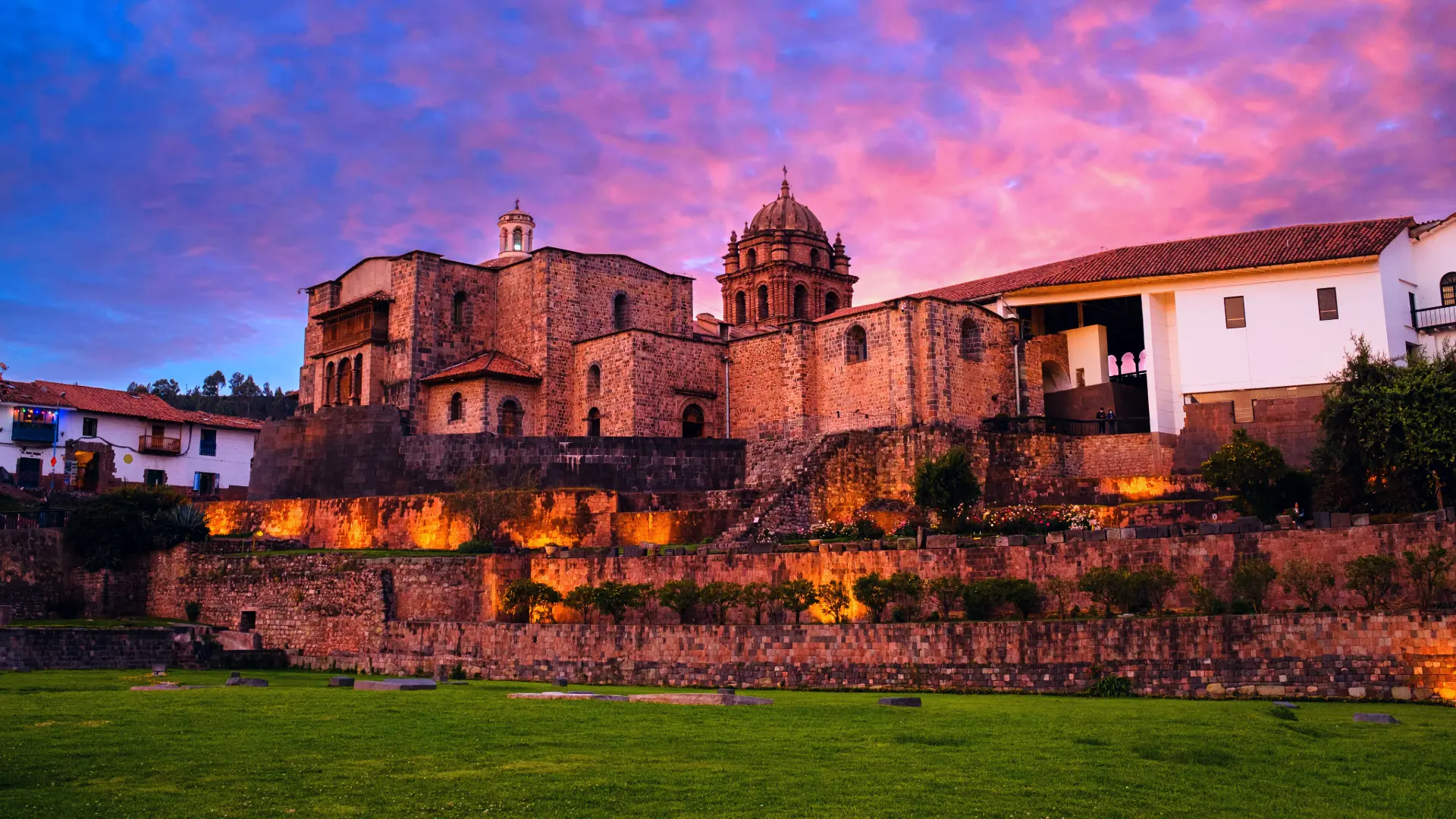
Unlike many other archaeological sites, Qorikancha offers visitors the rare opportunity to witness two distinct civilizations in one location. Massive Inca stone walls form the foundation of the colonial Church of Santo Domingo, creating one of the clearest examples of how Spanish colonial architecture was built directly upon Inca engineering.
Beyond its impressive architecture, Qorikancha also played a central role in Inca astronomy. Priests observed the movements of the sun and stars here, using astronomical alignments to determine the agricultural calendar, organize religious ceremonies, and celebrate important festivals such as Inti Raymi, the Festival of the Sun.
Today, Qorikancha continues to attract travelers from around the world because it combines exceptional history, remarkable architecture, deep spiritual significance, and one of the finest examples of Inca stone masonry ever constructed.
The History of Qorikancha Temple
Long before Spanish conquistadors arrived in Peru, Qorikancha stood at the heart of the Inca capital as the empire’s most sacred sanctuary. More than a temple, it represented the political, religious, and cosmological center of Tawantinsuyu, where the Inca rulers honored the gods they believed governed the universe.
Although historians continue to debate the temple’s earliest origins, most agree that it gained its greatest importance during the reign of Emperor Pachacútec in the fifteenth century. Under his leadership, Cusco transformed into the capital of a vast empire, and Qorikancha became its most magnificent religious complex.
Dedicated primarily to Inti, the Sun God, the temple also included sanctuaries devoted to the Moon, stars, lightning, rainbows, and other sacred forces of nature. Priests, nobles, and pilgrims traveled from every corner of the empire to participate in ceremonies that reinforced both religious beliefs and imperial authority.
Spanish chroniclers described Qorikancha as one of the richest temples they had ever seen. Its walls reportedly gleamed with gold, while its ceremonial gardens displayed life-sized figures of llamas, corn, birds, and plants crafted from precious metals. Although these treasures disappeared during the conquest, the extraordinary stone foundations survived.
In the sixteenth century, the Spanish built the Church and Convent of Santo Domingo directly on top of the Inca temple. Rather than erasing Qorikancha, this transformation created one of the world’s most remarkable architectural contrasts. Today, visitors can still admire the perfectly fitted Inca walls supporting the colonial structure above—a powerful reminder of the resilience, engineering skill, and enduring legacy of the Inca civilization.

The Temple of the Sun: The Sacred Heart of the Inca Empire
At the center of Qorikancha stood the Temple of the Sun, the most sacred sanctuary of the Inca Empire. Dedicated to Inti, the Sun God, this magnificent chamber served as the spiritual heart of Tawantinsuyu, where emperors, high priests, and nobles gathered to perform ceremonies honoring the deity they believed gave life, prosperity, and order to the world.
Unlike ordinary temples, the Temple of the Sun symbolized the divine authority of the Sapa Inca, who considered himself a direct descendant of Inti. Every important religious celebration, agricultural ceremony, and imperial ritual revolved around this sacred space.
According to Spanish chroniclers, the temple’s interior once dazzled visitors with walls covered in large sheets of solid gold that reflected the sunlight entering through carefully positioned openings. To the Incas, gold held no monetary value. Instead, they regarded it as the “sweat of the Sun,” a sacred material that honored their most important deity.
Although these treasures disappeared after the Spanish conquest, the temple’s extraordinary stone walls continue to reveal the sophistication of Inca engineering and the spiritual significance that once defined this remarkable sanctuary.
Masterpiece of Inca Architecture
Qorikancha represents one of the finest examples of Inca architecture ever built. More than five centuries after its construction, its perfectly fitted stone walls continue to withstand earthquakes that have damaged many colonial buildings throughout Cusco.
The Incas achieved this extraordinary durability without using mortar. Instead, master stonemasons carved each block individually until it fit its neighboring stones with astonishing precision. Even today, visitors cannot insert a knife blade between many of the joints, demonstrating an engineering technique that still fascinates architects and archaeologists worldwide.
Unlike modern construction, which often relies on rigid materials, Inca builders designed structures capable of absorbing seismic movement. Their flexible construction techniques allowed the walls to shift slightly during earthquakes before settling back into place, significantly reducing structural damage.
This remarkable engineering explains why much of Qorikancha survived centuries of earthquakes while several sections of the colonial buildings above required repeated reconstruction.
Extraordinary Engineering That Defied Earthquakes
One of the most fascinating aspects of Qorikancha is its advanced seismic-resistant design. Living in one of the world’s most active earthquake zones, the Incas developed construction methods centuries ahead of their time.
Several architectural features contributed to the temple’s incredible stability:
- Finely carved stones fitted together without mortar.
- Slightly inclined walls that improved structural balance.
- Trapezoidal doors and windows that distributed seismic forces.
- Carefully engineered foundations that reduced ground movement.
- Perfectly aligned stone courses that enhanced overall stability.
The effectiveness of these techniques became evident after major earthquakes struck Cusco over the centuries. While many colonial structures suffered severe damage, the original Inca foundations remained remarkably intact, highlighting the ingenuity of their builders.
Today, engineers continue to study Qorikancha as one of the world’s greatest examples of ancient earthquake-resistant architecture.

The Golden Garden: One of the Greatest Treasures of the Inca Empire
Beyond its magnificent temples, Qorikancha once featured one of the most extraordinary ceremonial gardens ever created in the ancient Americas.
Historical accounts describe a sacred garden filled with life-sized sculptures crafted entirely from gold and silver. Artisans created representations of llamas, alpacas, birds, maize plants, flowers, trees, and even insects using precious metals, transforming the temple into a symbolic reflection of the natural world.
Rather than serving as decoration, these sculptures expressed the Incas’ profound respect for nature and their belief that harmony between humans, the earth, and the gods ensured the prosperity of the empire.
Most of these masterpieces disappeared during the Spanish conquest, when conquistadors melted the precious metals and shipped them to Europe. Although the Golden Garden no longer survives, its story continues to illustrate the immense wealth, artistic sophistication, and spiritual beliefs of the Inca civilization.
More Than One Temple: The Sacred Complex of Qorikancha
Although many visitors know Qorikancha as the Temple of the Sun, the archaeological complex actually included several sanctuaries dedicated to different celestial bodies and sacred forces of nature.
Each temple reflected the Incas’ deep understanding of astronomy and their belief that the universe functioned as an interconnected system.
Among the most important sanctuaries were:
- Temple of the Moon (Quilla)
Dedicated to Mama Quilla, the Moon Goddess, this sanctuary honored fertility, the lunar calendar, and the passage of time. The Incas used lunar cycles to organize agricultural activities and important religious celebrations. - Temple of the Stars
The Incas carefully observed the stars to determine seasonal changes and agricultural cycles. This sanctuary recognized the importance of celestial observation in daily life and state administration. - Temple of Lightning
Known as the sanctuary of Illapa, the god of thunder, lightning, and rain, this temple honored the forces responsible for water, storms, and successful harvests. - Temple of the Rainbow
The rainbow symbolized prosperity and divine protection in Inca cosmology. This sanctuary reflected the empire’s close relationship with natural phenomena and the surrounding Andean landscape.
Together, these sacred spaces transformed Qorikancha into far more than a single temple. They created a ceremonial complex where religion, astronomy, politics, and science converged in one of the most sophisticated spiritual centers ever built in the Andes.

The Church of Santo Domingo: Where Two Civilizations Meet
Following the Spanish conquest in the sixteenth century, Dominican missionaries constructed the Church and Convent of Santo Domingo directly above Qorikancha. Rather than demolishing the Inca foundations, they used the existing stone walls as the structural base for the new colonial complex.
Today, this unique combination allows visitors to witness two architectural traditions in a single location. Massive Inca walls support elegant colonial arches, vaulted ceilings, and Renaissance-inspired courtyards, creating one of Peru’s most remarkable examples of cultural transformation.
The contrast becomes especially striking inside the complex. Visitors can clearly distinguish the perfectly carved Inca masonry at ground level from the colonial construction above, illustrating how Spanish builders relied on the exceptional strength of Inca engineering.
Far from diminishing Qorikancha’s importance, this architectural fusion tells the story of Cusco itself—a city where Inca heritage and colonial history remain inseparably connected.
What Can You See During Your Visit?
Today, Qorikancha offers much more than ancient stone walls. As you explore the complex, you’ll discover a remarkable combination of archaeological remains, colonial architecture, museums, and ceremonial spaces that reveal the evolution of Cusco over several centuries.
Highlights of the visit include:
- The original Temple of the Sun and its precisely crafted stone walls.
- Beautiful examples of Inca ashlar masonry.
- The colonial Church of Santo Domingo.
- Peaceful cloisters surrounding the central courtyard.
- Archaeological galleries displaying Inca artifacts.
- Ceremonial patios used for religious gatherings.
- Panoramic views of Cusco from selected sections of the complex.
- Informative exhibits explaining Inca astronomy, engineering, and religion.
Most visitors spend between 45 minutes and one hour exploring the site, although history enthusiasts often choose to stay longer to appreciate the museum collections and architectural details.
Admission Tickets and Entrance Fees
Planning your visit to Qorikancha Temple Cusco starts with understanding the admission options. Unlike several archaeological sites around Cusco that require the Cusco Tourist Ticket (Boleto Turístico), Qorikancha has its own entrance ticket purchased directly at the site.
Ticket prices may change over time, so it’s always a good idea to confirm the latest rates before your visit. In most cases, you can buy your ticket at the entrance without making a reservation in advance.
| Visitor Information | Details |
|---|---|
| Ticket Required | Yes |
| Advance Reservation | Not required for most visitors |
| Where to Buy | Ticket office at the entrance |
| Guided Tours Available | Yes |
| Payment Methods | Cash is recommended, although card payments may be accepted depending on current policies. |
If you join a Cusco City Tour, admission may already be included in the tour package, so check with your tour operator before purchasing a separate ticket.
Opening Hours
Qorikancha welcomes visitors throughout most of the week, making it easy to include the temple in almost any Cusco itinerary.
Although schedules occasionally change during holidays or special religious events, the archaeological complex generally follows regular opening hours.
| Opening Information | Schedule |
|---|---|
| Monday – Saturday | Open during daytime hours |
| Sunday | Limited hours or subject to special schedules |
| Best Time to Visit | Early morning or late afternoon |
Arriving shortly after opening allows you to enjoy a quieter atmosphere, take better photographs, and explore the complex before larger tour groups arrive.
How Long Does It Take to Visit Qorikancha?
Most travelers spend 45 to 60 minutes exploring Qorikancha, making it one of the easiest archaeological sites to include in a full day of sightseeing around Cusco.
However, the ideal visit depends on your interests.
- 30–45 minutes: A quick self-guided visit focused on the main temple and archaeological remains.
- 45–60 minutes: The most common option, allowing enough time to explore both the Inca ruins and the Church of Santo Domingo.
- 90 minutes or more: Recommended for travelers interested in archaeology, architecture, photography, or guided tours that provide deeper historical context.
Because the complex is compact and easy to navigate, visitors rarely feel rushed while exploring its different sections.
Best Time to Visit Qorikancha
You can visit Qorikancha throughout the year, but your experience varies depending on the season and the time of day.
Morning
Morning offers the best overall experience. Cooler temperatures, softer sunlight, and fewer visitors create excellent conditions for photography and allow you to appreciate the stonework without large crowds.
Morning visits also fit perfectly into a first-day itinerary around Cusco’s Historic Center.
Afternoon
Afternoons usually attract more organized tour groups. While the atmosphere becomes livelier, certain areas of the complex may feel busier.
Late afternoon provides beautiful lighting for architectural photography, especially inside the colonial cloisters and courtyards.
Dry Season (May to October)
The dry season offers sunny skies, comfortable walking conditions, and clearer views throughout Cusco. It is generally the most popular time to visit.
Rainy Season (November to April)
Although occasional showers occur during these months, Qorikancha remains an excellent destination because much of the visit takes place within protected courtyards and indoor galleries. Rain often leaves the Inca stonework with a striking appearance that many photographers appreciate.
Can You Visit Qorikancha Without a Tour?
Yes. Independent travelers can easily visit Qorikancha without joining an organized tour.
Its central location, clear visitor route, and informative exhibits make it one of the most accessible archaeological sites in Cusco. If you enjoy exploring at your own pace, purchasing your entrance ticket at the site allows you to spend as much time as you wish admiring the architecture and museum collections.
However, hiring a knowledgeable guide can significantly enrich your experience. Many architectural details, astronomical alignments, and religious symbols are easy to overlook without expert interpretation.
For travelers interested in understanding the deeper meaning behind the temple, a guided visit provides valuable historical and cultural context.
Is Qorikancha Included in the Cusco Tourist Ticket?
This is one of the most common questions visitors ask before arriving in Cusco.
No. Qorikancha is generally not included in the standard Cusco Tourist Ticket (Boleto Turístico). Admission to the archaeological complex is usually purchased separately at the entrance.
Because ticket policies occasionally change, it’s advisable to verify the latest information before your visit or confirm with your tour operator if you’re booking a guided excursion.
If you’re planning to visit several museums and archaeological sites during your stay, comparing the Tourist Ticket options in advance can help you organize both your itinerary and your budget more efficiently.
Qorikancha During Inti Raymi
Every year on June 24, Qorikancha once again becomes one of the spiritual centers of Cusco during Inti Raymi, the Festival of the Sun.
The celebration begins with an impressive ceremonial reenactment outside the temple, where actors portraying the Sapa Inca, priests, nobles, and members of the royal court perform rituals honoring Inti, just as their ancestors did centuries ago.
Thousands of spectators gather around Qorikancha to witness the opening ceremony before the celebration continues toward Cusco’s Plaza de Armas and finally reaches the impressive fortress of Sacsayhuamán, where the main performance takes place.
Visiting Cusco during Inti Raymi offers a unique opportunity to experience living traditions that connect modern Peru with its Inca heritage. Because June is one of the busiest months of the year, booking accommodations, entrance tickets, and tours several months in advance is highly recommended.
How to Include Qorikancha in Your Cusco Itinerary
Thanks to its central location, Qorikancha fits easily into almost every itinerary through Cusco.
If you’ve just arrived in the city, visiting Qorikancha on your first or second day is an excellent way to begin exploring while allowing your body to adjust to Cusco’s altitude.
A recommended walking itinerary includes:
- Start your morning at Cusco’s Plaza de Armas.
- Visit Cusco Cathedral.
- Walk along Avenida El Sol to Qorikancha.
- Continue toward San Blas Neighborhood.
- Finish the afternoon at San Pedro Market, where you can enjoy traditional Peruvian food, fresh fruit juices, and local handicrafts.
This route combines history, architecture, gastronomy, and local culture while keeping the walking distance comfortable for most travelers.
Nearby Attractions You Shouldn’t Miss
One of the greatest advantages of visiting Qorikancha Temple is its location in the heart of Cusco’s Historic Center. Within just a few minutes on foot, you can discover some of the city’s most iconic landmarks, making it easy to build a full day of sightseeing without relying on transportation.
Cusco’s Plaza de Armas
Only a short walk from Qorikancha, Cusco’s Plaza de Armas serves as the historic and cultural center of the city. Surrounded by colonial arcades, lively cafés, restaurants, and impressive churches, the square offers the perfect place to continue your exploration after visiting the Temple of the Sun.
Cusco Cathedral
Located on the eastern side of Plaza de Armas, Cusco Cathedral houses an extraordinary collection of colonial paintings, religious artifacts, and finely carved wooden altars. Its fascinating blend of European art and Andean symbolism makes it one of Peru’s most important colonial monuments.
San Blas Neighborhood
Just a 15-minute walk from Qorikancha, San Blas welcomes visitors with narrow cobblestone streets, whitewashed houses, artisan workshops, boutique cafés, and panoramic viewpoints overlooking Cusco. The neighborhood has long attracted artists, photographers, and travelers looking for a quieter atmosphere.
San Pedro Market
If you want to experience everyday life in Cusco, head to San Pedro Market after visiting Qorikancha. The market offers fresh tropical fruit, traditional Peruvian dishes, medicinal herbs, handmade souvenirs, and authentic Andean products, making it one of the city’s best cultural experiences.
Sacsayhuamán
For travelers interested in Inca engineering, Sacsayhuamán perfectly complements a visit to Qorikancha. Its enormous stone walls demonstrate the same extraordinary craftsmanship found at the Temple of the Sun, although on a much larger scale.
Practical Tips for Visiting Qorikancha
A little preparation can make your visit even more enjoyable. Keep these recommendations in mind before arriving at the temple.
- Visit early in the morning to avoid larger tour groups.
- Wear comfortable walking shoes, as you’ll likely continue exploring the Historic Center afterward.
- Bring a light jacket because temperatures can change quickly throughout the day.
- Carry a reusable water bottle and stay hydrated while adjusting to Cusco’s altitude.
- Allow at least one hour to fully appreciate both the archaeological site and the colonial church.
- Consider hiring a licensed local guide if you’d like a deeper understanding of Inca religion, astronomy, and architecture.
- Respect restricted areas and avoid touching the original stone walls to help preserve this remarkable archaeological site.
Why Qorikancha Should Be on Every Cusco Itinerary
Qorikancha is far more than an archaeological site—it is the place where the story of the Inca Empire and colonial Cusco comes together. From its precisely carved stone walls and sophisticated engineering to the colonial church that rises above its foundations, every corner of the complex reveals another chapter of Peru’s remarkable history.
Whether you’re fascinated by archaeology, architecture, astronomy, photography, or Andean culture, Qorikancha offers one of the most rewarding experiences in Cusco. Its central location, rich historical significance, and beautifully preserved remains make it an essential stop for first-time visitors and returning travelers alike.
Take your time to admire the remarkable stonework, explore the peaceful cloisters, learn about Inca cosmology, and appreciate the extraordinary craftsmanship that has survived for centuries. A visit to Qorikancha is more than a journey through history—it’s an opportunity to understand the spiritual and cultural foundations of the Inca world.
Continue Exploring Cusco with Magical Cusco Travel Agency
Qorikancha is only the beginning of your adventure in the Imperial City. Continue discovering Cusco’s rich history, breathtaking landscapes, and living traditions with our carefully designed tours led by knowledgeable local guides.
Whether you’re planning to explore the Historic Center of Cusco, visit the impressive fortress of Sacsayhuamán, discover the beauty of the Sacred Valley, or fulfill your dream of visiting Machu Picchu, our team will help you create an unforgettable experience tailored to your interests.
Explore our most popular experiences:
Experience the Andes with local experts and discover why thousands of travelers choose Magical Cusco Travel Agency to explore Peru.
FAQs
Is Qorikancha worth visiting?
Absolutely. Qorikancha ranks among Cusco’s most important archaeological attractions thanks to its exceptional Inca architecture, fascinating history, and unique combination of Inca and colonial heritage.
What does the name Qorikancha mean?
The name comes from the Quechua words Quri, meaning “gold,” and Kancha, meaning “enclosure” or “temple.” Together, they translate as “Golden Enclosure,” referring to the temple’s gold-covered walls during the height of the Inca Empire.
How much time do you need to visit Qorikancha?
Most visitors spend 45 to 60 minutes exploring the archaeological complex. Travelers interested in architecture, archaeology, or photography often stay longer.
Can you visit Qorikancha without a guide?
Yes. Independent visits are easy thanks to the site’s clear layout. However, a professional guide can provide valuable insights into Inca religion, engineering, and astronomy that greatly enrich the experience.
Is Qorikancha suitable for families?
Yes. The site is compact, easy to walk through, and suitable for visitors of all ages. Families with children can comfortably explore the complex in less than an hour.
Is photography allowed?
Photography is generally permitted in most outdoor areas of Qorikancha. Some indoor museum galleries or temporary exhibitions may have restrictions, so always follow the posted guidelines during your visit.
Can I visit Qorikancha on my first day in Cusco?
Yes. In fact, many travelers choose Qorikancha for their first day because its central location and relatively easy walk make it an excellent introduction to Cusco while acclimatizing to the altitude.
Why did the Spanish build Santo Domingo over Qorikancha?
After the conquest, the Spanish constructed the Church of Santo Domingo on top of the original Inca temple to establish their religious and political authority. Today, this remarkable combination allows visitors to see two architectural traditions standing together in one historic landmark.
Karen Pamela Riveros Rojas
